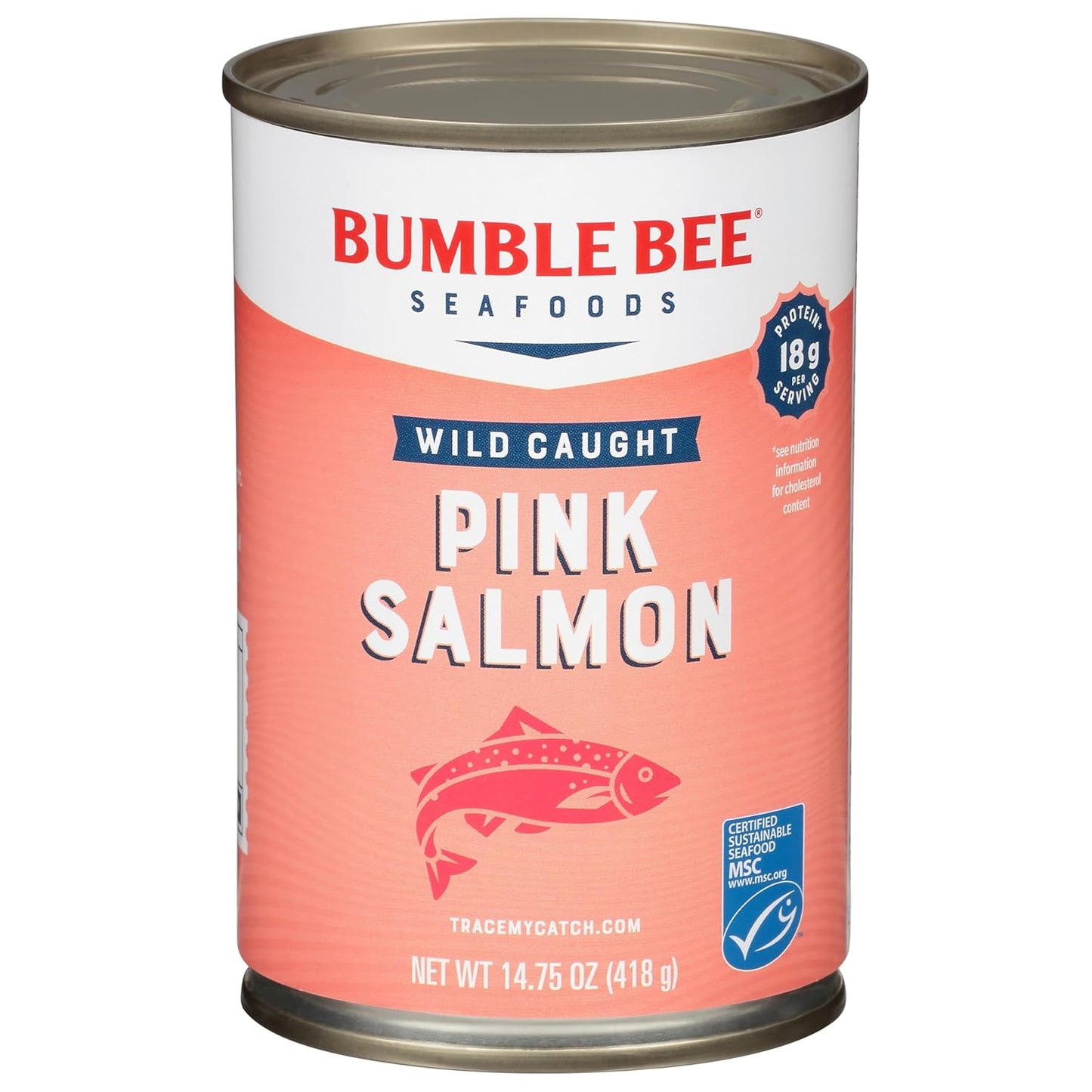
Bumble Bee Wild Pink Salmon – Shelf-Stable Protein for Camping, RV, and Road Trip Meals
Bumble Bee Wild Pink Salmon – Shelf-Stable Protein for Camping, RV, and Road Trip Meals
Couldn't load pickup availability
Why you'll love it
- MSC Certified Sustainable Seafood reassures eco-conscious buyers about ethical sourcing
- 18g protein and 1115mg Omega-3s per serving delivers restaurant-quality nutrition in a budget-friendly can
- Two-pack format options (14.75oz traditional with skin & bones vs 5oz skinless & boneless) suit both purists and convenience seekers
- Shelf-stable and pantry-friendly, eliminating last-minute grocery runs
- Compatible with multiple restrictive diets: Keto, Gluten-Free, Kosher, and Non-GMO verified
- Wild-caught pink salmon offers superior flavor and nutrition compared to farmed alternatives at a lower price point
- Mild taste makes it versatile for many recipes
- Boneless and skinless means no picking out bones or skin
- Has a little color (not pale/bleached looking)
- 20g protein per can is a high protein option
- Better tasting than tuna at similar price point
- Tastes better than expected for the low price
- Cheaper than store-bought equivalent
- Pull-top can for convenience
- Big meaty pieces work for various dishes
- Fits cardiac and kidney-friendly dietary restrictions
Perfect for
- Quick weeknight dinner base for salmon cakes, tacos, or pasta bowls
- High-protein pantry staple for emergency meals and meal prep
- Portable protein source for camping, traveling, or on-the-job lunches
- Ingredient for salmon salad or casseroles when fresh fish is unavailable
- Mix-in for rice bowls and grain salads to boost omega-3 intake
- Add to chopped or mixed salad with sweet dressings as a light meal option
- Sneak into saucy pasta dishes due to mild taste
- Make salmon croquettes/patties with diced veggies (red peppers, scallions), Worcestershire sauce, egg, flour, panko crumbs, pan-fried in olive oil
- Eat cold with a baked potato and mixed vegetables
- Curry the salmon or add sriracha sauce, onion, garlic, tomatoes for a spicy dish
- Serve on non-good days (sick/easy meal days)


Product Information
WILD CAUGHT SALMON: Fished from a plentiful species and an exceptional value. Non-GMO Project Verified, Gluten Free, Keto Friendly, and Kosher Certified. Canned in traditional pack-style with skin and bones. FISH AS FUEL: A nutritional powerhouse high in Vitamin D, Niacin, Vitamin B12, and Selenium, with 1115mg of Omega-3s per serving. Excellent source of protein (18g per serving; about five servings per can). PERFECT FOR SALMON RECIPES: Canned fish is perfect for tacos, casseroles, salmon salad, salmon cakes and patties, rice bowls, and pasta dishes. Add the firm, flavorful chunks to your favorite recipes, or simply enjoy the delicious salmon on its own. CONVENIENT SHELF STABLE FOOD: Perfect for stocking your pantry at home or bringing on the go as a high-protein option while traveling, camping, or on the job. SUSTAINABLE SALMON: MSC Certified Sustainable Seafood - submit the product code on our Trace My Catch website to learn where and how your seafood was caught, processed, and more.
Product Dimensions : 3 x 3 x 4.5 inches; 1.08 Pounds Item model number : 8660012331 UPC : 086600000701 Manufacturer : Bumble Bee Units : 14.75 Ounce Best Sellers Rank: #1,679 in Grocery & Gourmet Food
Frequently Asked Questions
Do I need a cooler to store this salmon while camping?
No. Because the cans are fully shelf-stable, you can pack them in your RV, cabin, or backpack without refrigeration. They are a true set-it-and-forget-it protein for trips where cooler space is limited.
How long does canned salmon last in my camping pantry?
Unopened cans have a multi-year shelf life, typically three to five years from the date of pack. This makes them ideal for long-term storage in an RV galley, a bug-out bag, or a backcountry dry sack.
Is the pull-top can easy to open at a campsite without tools?
Yes. The pull-top lid is designed for one-handed opening with no can opener required, which is a major plus around a campfire, in a tent, or at a roadside pull-off where tools are limited.
Can I eat this salmon cold straight from the can on the trail?
Absolutely. The 5 oz skinless and boneless version is fully cooked and ready to eat. It is a satisfying, high-protein cold lunch that requires no stove, no cleanup, and no prep time.
How much protein do I get per can for multi-day trips?
The 14.75 oz can provides about 5 servings of 18g protein each, making it easy to fuel a group over a long weekend. The 5 oz can is a single-serving option for solo travelers who want portion control.
Is this salmon lightweight enough for backpacking?
Yes. A 5 oz can is one of the most calorie-dense, protein-rich foods you can pack per ounce, and the empty can is recyclable in most established campgrounds. For ultralight trips, decant the salmon into a lightweight pouch before you leave.
Will the can hold up in extreme heat or cold?
Yes. Canned salmon is rated for a wide temperature range and does not require climate control. It tolerates trunk heat, freezing winter storage, and humid conditions as long as the can remains sealed and undamaged.
How does this salmon compare to freeze-dried camping meals?
Freeze-dried meals run $7 to $12 per serving and are often carb-heavy. A can of wild pink salmon delivers more protein, real omega-3s, and better satiety at a fraction of the per-serving cost.
Is there a way to verify the sustainability of the catch before I buy?
Yes. The MSC Certified Sustainable Seafood label and the Trace My Catch program let you enter a code from the can to see exactly where and how your salmon was caught. That level of transparency is unusual in canned seafood.
Can I use this salmon for hot campfire cooking, or is it only for cold meals?
It works beautifully for both. You can warm the cans directly in a pot of water over the fire or flake the salmon into a one-pan camp skillet with onions and seasoning for a hot dinner in minutes.
What if the can gets dented during my trip?
Severe dents, swelling, or leaking cans should be discarded. Small dents on the rim from normal transport are usually fine, but always inspect before opening. The pull-top lid also reduces the risk of metal shavings versus traditional openers.
Is this salmon compatible with a backpacking bear canister?
Yes. Canned salmon is sealed, scent-managed when unopened, and far less attractive to wildlife than fresh meat or trail snacks. It is a smart protein option for bear-aware camping areas.
How does canned salmon compare to tuna for camping trips?
Wild pink salmon has a milder, richer flavor than tuna, a more sustainable supply chain, and a higher omega-3 content. Many campers switch to salmon for variety and a more substantial, meaty texture.
Will the omega-3s survive long-term storage in my RV pantry?
Yes. The canning process locks in omega-3 fatty acids at the time of packing, and the sealed environment protects them from oxidation. An unopened can stays nutritionally reliable for years.
Is this product safe to pack in checked luggage for international travel?
Yes, sealed canned salmon is permitted in checked luggage on most airlines. For carry-on, follow TSA rules regarding liquids, but a sealed can of salmon in water is generally allowed.
How can I use this salmon for a one-can campsite dinner?
Empty the can into a skillet, add olive oil, diced onion, garlic, and a pouch of pre-cooked rice. Warm everything together, finish with salt and pepper, and you have a hot, protein-rich campsite dinner in under 10 minutes.
How do I make quick salmon patties from this canned salmon?
Drain one can and flake the salmon into a bowl. Add one beaten egg, a quarter cup of panko breadcrumbs, one tablespoon of flour, a teaspoon of Worcestershire sauce, and finely diced red peppers and scallions. Form into small patties and pan-fry in olive oil for three to four minutes per side until golden brown.
What is the best way to store this salmon after opening?
Transfer any unused salmon to an airtight container or a sealed glass jar and refrigerate. Consume within three days for best quality. Do not store the opened can itself in the fridge, as the metal can affect flavor and texture.
Can I freeze canned salmon for longer storage?
Yes. For best results, drain the salmon and transfer it to a freezer-safe container or vacuum-sealed bag. It will keep in the freezer for up to three months. Thaw overnight in the refrigerator before using.
Is this salmon compatible with keto, gluten-free, kosher, and non-GMO diets?
Yes. It is naturally Keto Friendly and Gluten Free, Non-GMO Project Verified, and Kosher Certified. The ingredient list is just salmon, water, and salt, so it fits cleanly into most restricted eating plans.
Does this product contain any major allergens besides fish?
The only allergen is fish. There are no dairy, soy, wheat, or nut ingredients, and the product is processed in a facility that does not introduce cross-contaminants beyond standard seafood handling.
What exactly comes in the package when I order?
You will receive sealed cans of Bumble Bee Wild Pink Salmon in the size you select. The 14.75 oz can is the traditional pack-style with skin and bones intact, and the 5 oz can is skinless and boneless. A pull-top lid is included on each can. No additional accessories or tools are needed.
Is canned salmon safe to eat every day?
Yes for most people. Pink salmon is a low-mercury species, and most dietary guidelines consider two to four servings per week a healthy, sustainable amount. If you have specific medical conditions, consult your healthcare provider.
How do I know if the can is still good to eat?
Check the best-by date printed on the can. The can should be free of deep dents, swelling, leaks, or rust. A slight 'pop' when opening and a fresh ocean scent are good signs. If anything looks or smells off, discard it.
What is the difference between canned salmon and canned tuna?
Salmon generally has a milder, richer flavor, a higher omega-3 content, lower mercury levels, and is almost always wild-caught, while much canned tuna is skipjack or yellowfin. Salmon also offers more vitamin D and a more substantial, meaty texture, making it a more nutrient-dense pantry swap.