Lotus Foods Organic Forbidden Rice – Rare Black Dragon River Heirloom Grain for Fine Dining and Elevated Risotto Nights
Lotus Foods Organic Forbidden Rice – Rare Black Dragon River Heirloom Grain for Fine Dining and Elevated Risotto Nights
Couldn't load pickup availability
Why you'll love it
- Ancient 'longevity rice' reputation delivers meaningful antioxidant and fiber benefits over plain white rice
- Triple-certified pedigree (USDA Organic, Non-GMO, Gluten-Free) removes common dietary and ethical concerns
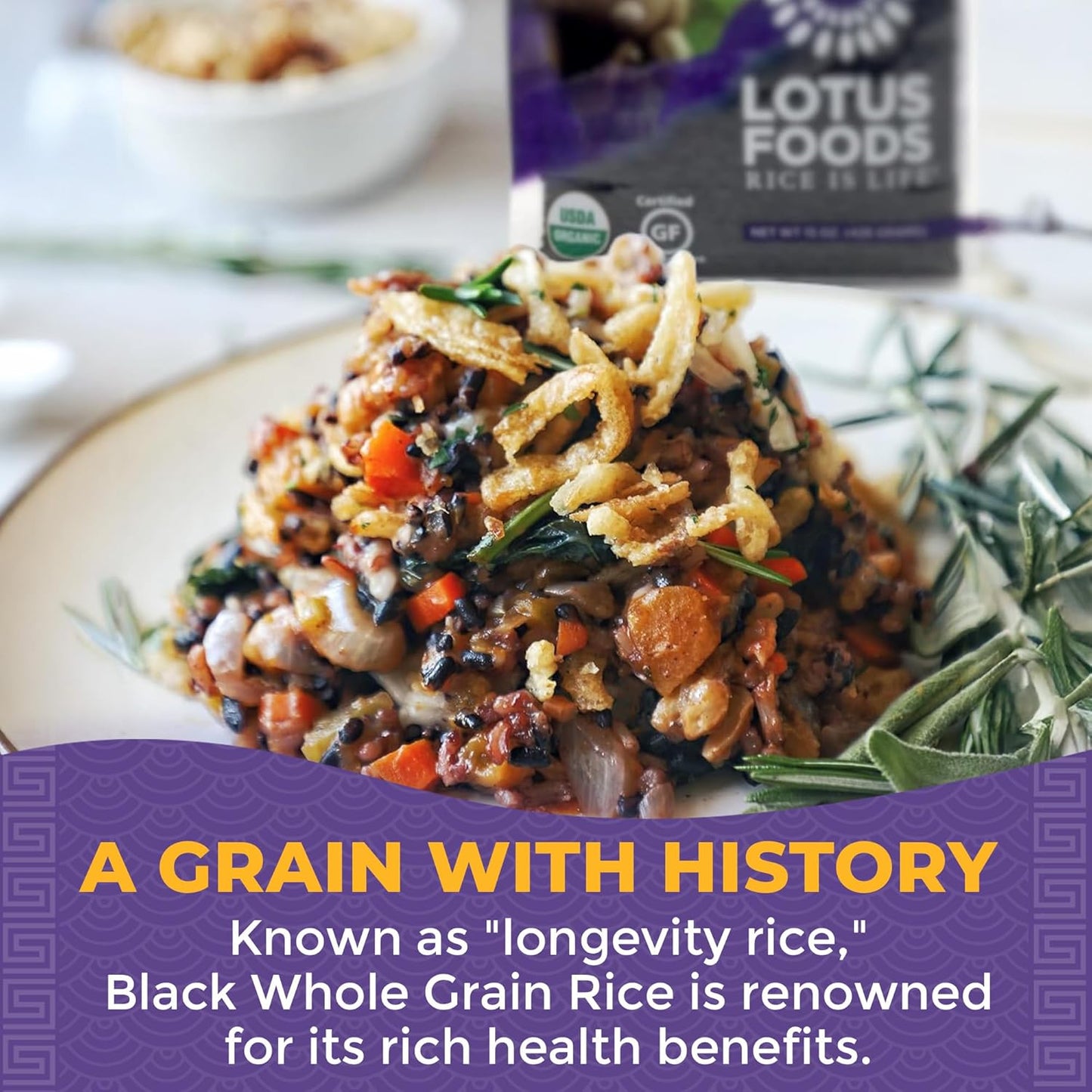
- Deep purple color creates striking visual contrast that elevates plates and impresses dinner guests
- Single-ingredient heirloom grain with no additives or oil appeals to clean-eating purists
- Sustainably grown in China's Black Dragon River region supports biodiversity and farmer welfare
- One 15 oz bag yields roughly 9 servings, making it a practical pantry staple rather than a novelty
- Nutty flavor
- Chewy texture
- Less starchy than brown rice
- Beautiful presentation on the plate
- Sweet and chewy when used for rice cake
- Healthy and nutritious
- Easy on the stomach
- Easy to cook in a rice cooker without special technique
- Makes a good side dish with butter and Celtic salt
- Family-friendly (kids and grandchildren enjoy it)
Perfect for
- stir-fry base for quick weeknight family dinners
- sushi rice alternative for homemade sushi nights
- nutritious side dish or grain bowl for meal prep
- eye-catching purple rice for salads and entertaining
- gluten-free risotto or pilaf for guests with dietary restrictions
- Mixing with white rice to enhance color and appearance
- Making rice cake
- Cooking in an Instant Pot (2 cups rice, 2 cups water, high pressure 17 min, 10 min natural release)
- Serving in a bowl with roasted vegetables
- Cooking in a standard rice cooker
Product Information
ANCIENT GRAIN - With rich historical significance to the regions of China, Black whole grain rice was referred to as "longevity rice" for its rich health benefits NUTRITIOUS WHOLE GRAIN RICE - This gluten-free, high-fiber rice is rich in antioxidants and nutrients and has no additives or oil, which promotes digestive health DELICIOUSLY VERSATILE- Our 15 oz pack of black rice can make up to 9 servings, making it perfect for family meals. The deep purple rice is perfect for salads, stir-fry, risottos, sushi, and more CERTIFIED ORGANIC BLACK RICE - Maintaining its cultivated nature, the Certified Gluten Free and Non-GMO Rice is USDA Certified Organic, and grown in the Black Dragon River region of China SUSTAINABLY SOURCED - Lotus Foods produces responsibly. We are committed to preserving biodiversity, employing sustainable farming practices, and improving farmers' welfare
Package Dimensions : 7.28 x 4.33 x 1.57 inches; 15.2 ounces UPC : 708953102603 Manufacturer : Lotus Foods Units : 1 Count Best Sellers Rank: #9,793 in Grocery & Gourmet Food
Frequently Asked Questions
What makes this heirloom black rice feel premium compared with regular rice?
Three things: provenance, pigment, and pedigree. The rice is a heritage variety grown by family farmers in the Black Dragon River region of China, it has a naturally deep purple-black color you simply cannot fake, and it carries USDA Organic, Non-GMO, and Gluten-Free certifications that signal quality at every level.
Is the single-origin origin story real and worth talking about at the table?
Yes. Black Dragon River is a real, ecologically distinctive region in northeast China, and Lotus Foods works directly with smallholder farmers there under biodiversity and fair-labor commitments. It is a true single-origin story, not a marketing rebrand of generic rice.
How does the purple color perform in a high-end dinner party presentation?
It is genuinely show-stopping. The deep violet grains against white fish, green herbs, or yellow squash create a contrast that looks plated by a professional. Many chefs use it specifically to add visual drama to risottos, sushi, and composed salads.
Does it work for elevated dishes like risotto and pilaf, or only sides?
Forbidden rice makes a stunning risotto because the grains stay separate and chewy rather than breaking down the way arborio does. It is equally at home in a fragrant pilaf with stock, aromatics, and toasted nuts — both feel right at home on a fine-dining menu.
Can I use it for a sushi night that impresses guests?
Yes. Sushi rice alternative is one of the most popular luxury uses. Season the cooked grains with seasoned rice vinegar just like you would with white sushi rice, then roll with fish or vegetables. The natural purple color shines through the nori and turns a simple roll into a centerpiece.
How does this compare to Italian arborio rice for a risotto night?
Arborio releases starch to create the classic creamy risotto texture, while forbidden rice stays separate and chewy with a striking color. For a traditional creamy risotto, arborio wins. For a modern, presentation-forward risotto with more bite and visual drama, forbidden rice is the more elevated choice.
How does this compare to basmati or jasmine for a special-occasion side dish?
Basmati and jasmine are fragrant and elegant, but they are still white grains. Forbidden rice delivers the same 'special side' role with the added visual impact of deep purple and a chewier texture that contrasts nicely with rich, saucy mains like braised short rib or roasted duck.
How does it compare to Italian carnaroli or vialone nano for serious risotto fans?
Carnaroli and vialone nano are still the gold standard for classic Italian risotto texture. Forbidden rice is not trying to replace them — it is an alternative for cooks who want a grain that holds its shape, carries color, and works with bolder global flavors. Many chefs use both depending on the dish.
Is the packaging presentation worth keeping on display in a curated pantry?
Yes. The bag has a heritage feel with clear sourcing language and a clean, modern design that holds its own next to artisanal olive oils, salts, and vinegars. It is the kind of staple you are happy to leave visible rather than tuck behind a cabinet door.
Is this a good rice for a tasting menu or multi-course dinner?
It is a strong choice. Forbidden rice shows up beautifully as a colored base under seared fish or mushroom, as a striking middle course in a composed salad, and as a memorable sushi course. The color anchors a plate in a way that white rice simply cannot.
Is the price justified for a premium pantry item?
For a true heirloom, single-origin, triple-certified rice, the price is in line with other premium pantry staples like aged balsamic, single-origin vanilla, or specialty salts. You are paying for provenance, organic farming, and the visual payoff on the plate — all of which read as 'premium' to a guest.
My main hesitation is the higher price — is this worth it over bulk supermarket rice?
If you view rice as a background starch, supermarket bulk will do. If you view rice as part of the plate's visual and flavor story — the way you would treat a finishing salt or a single-origin oil — then heirloom forbidden rice earns its place. Most customers who try it stop going back to plain white for special dinners.
Will guests actually notice the difference, or is it just a pretty color?
Guests notice three things: the color, the chewier bite, and the nutty flavor. Even diners who say they 'just want regular rice' usually comment on the dish, ask what it is, and leave remembering it. It is one of the highest-impact, lowest-effort upgrades you can make to a dinner party menu.
How do I cook Lotus Foods Organic Forbidden Rice on the stovetop?
Rinse 1 cup of rice under cool water. Combine with 2 cups of water and a pinch of salt in a heavy pot, bring to a boil, reduce to a low simmer, cover, and cook for 25–30 minutes until the water is absorbed. Remove from heat, let it rest covered for 5 minutes, then fluff with a fork for distinct, chewy purple grains.
What is the Instant Pot method for cooking this black rice?
Rinse the rice, then add 2 cups of rice to 2 cups of water in the Instant Pot. Lock the lid, set to high pressure for 17 minutes, and allow a 10-minute natural release before opening. Fluff and serve — perfect, chewy grains every time with no watching required.
Can I use a standard rice cooker for this rice, and what ratio should I use?
Yes, a standard rice cooker is one of the easiest ways. Use a 1:2 rice-to-water ratio (for example, 1.5 cups rice to 3 cups water for a half bag), select the white rice or standard setting, and let the machine run. When it switches to 'warm,' let the rice rest 5–10 minutes, then fluff.
Does this rice work with other grains like white rice or brown rice in the same pot?
You can cook it mixed with white rice for a marbled purple-and-white effect, but the easiest approach is to cook them separately and combine after cooking, since white rice and forbidden rice have slightly different cook times. Many customers layer the cooked grains in bowls for visual contrast.
Is this rice compatible with keto, paleo, Whole30, or low-carb diets?
Forbidden rice is a whole grain, so it is higher in carbohydrates than cauliflower rice or shirataki, and it is not compatible with strict keto, paleo, or Whole30. It does fit comfortably in balanced plant-based, gluten-free, Mediterranean, and flexitarian eating patterns where whole grains are encouraged.
What is actually inside the 15 oz bag when it arrives?
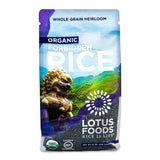
You will receive one 15 oz resealable bag containing 100% organically grown heirloom black rice from the Black Dragon River region of China. There is one ingredient, no additives, no oil, and no seasoning. A quick recipe idea is often printed on the back of the bag.
Is this rice safe to eat every day, and are there any health concerns I should know about?
For most adults, yes — it is a real whole food. As with all rice, it naturally contains trace levels of inorganic arsenic, though Lotus Foods has published third-party testing showing lower levels than many competing black rice brands. Rotating grains in your diet and portioning colored rice moderately are easy ways to keep exposure low.
How should I store the bag after opening to keep the rice fresh?
Reseal the bag tightly or transfer the rice to an airtight glass or stainless container, and store in a cool, dry pantry away from direct sunlight. Properly stored, uncooked forbidden rice will stay fresh for 1–2 years. Cooked rice should be refrigerated and used within 4 days, or frozen for longer storage.
What is the difference between forbidden rice, black rice, purple rice, and wild rice?
Forbidden rice, black rice, and purple rice are all common names for the same heirloom Oryza sativa variety prized in China for centuries. Wild rice is an entirely different plant — a North American aquatic grass seed with a longer, more delicate grain and a nuttier, earthier flavor. Forbidden rice has a shorter, plumper grain, a chewier bite, and a striking purple-black color when cooked.