Reflective Window Insulation Roll – Portable Radiant Barrier for Patio Covers and Camping Setups
Reflective Window Insulation Roll – Portable Radiant Barrier for Patio Covers and Camping Setups
Couldn't load pickup availability
Why you'll love it
- Year-round dual-purpose insulation that handles both summer heat and winter cold loss in one roll
- Removable hook-and-loop mounting makes it renter-friendly and damage-free compared to permanent window film
- No professional installation needed — a utility knife and the included tape are enough
- Fits non-standard spaces like RV windows, garage doors, and greenhouse panels where traditional insulation is hard to find
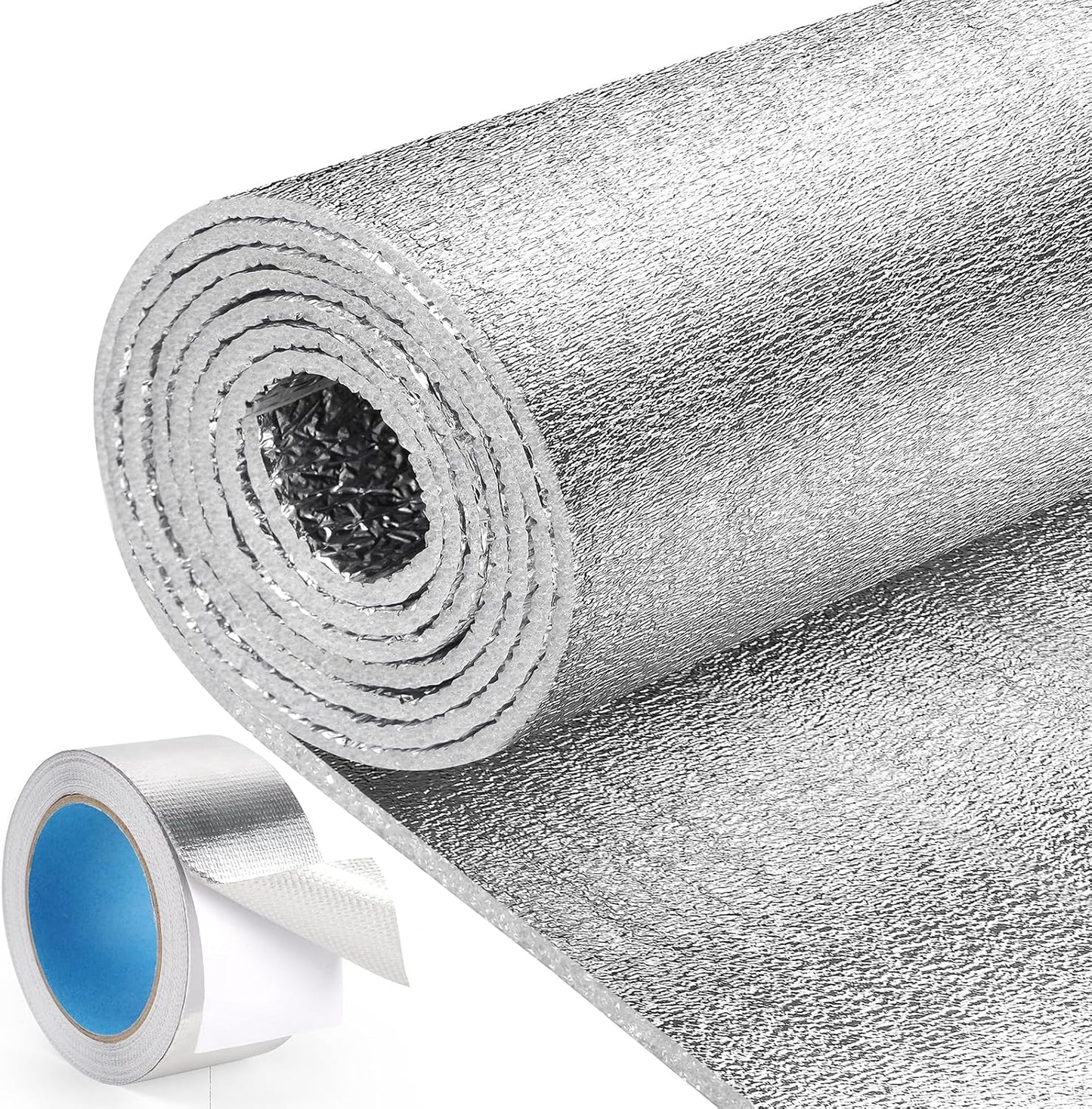
- Three-layer aluminum-and-foam construction delivers radiant barrier performance at a DIY price point
- Four size options let buyers match coverage to their specific project instead of over-buying
Perfect for
- Cut-to-size window insulation for winter heat retention in old or drafty homes
- Blocking radiant summer heat through west-facing or sun-exposed windows
- Reducing RV interior temperature swings during hot or cold travel seasons
- Lining garage door panels to create a more usable workspace year-round
- Lowering monthly energy bills by adding a removable radiant barrier to single-pane windows
Frequently Asked Questions
Can this reflective roll be used on a patio enclosure that gets full afternoon sun?
Yes. The double-sided aluminum foil surface reflects radiant heat on both sides, so patio enclosures, pergola covers, and west-facing porches stay noticeably cooler during peak sun hours without darkening the space.
Will the foam core hold up in humid outdoor conditions like a greenhouse or covered patio?
The waterproof aluminum foil faces seal the polyethylene foam core from moisture, making it suitable for greenhouses, covered patios, and other humid outdoor spaces without delaminating or growing mildew.
Is the roll light enough to bring camping or on an RV trip?
The 16 in and 24 in roll formats are compact and lightweight, and the material cuts easily with a utility knife so you can pack only the panels you need for a specific campsite or trip.
How do I mount it on an outdoor surface that isn't a standard window?
Use the included 65 hook-and-loop adhesive pads to attach the cut-to-size panel to any clean, flat surface such as a patio door, camper side window, or shed vent cover. No drilling or permanent hardware is required.
Does the reflective surface get hot to the touch in direct sun?
The aluminum face does warm up in direct sun, which is exactly how it reflects radiant heat away. Once mounted with a small air gap behind the panel, the heat is blocked from passing into the room rather than building against the surface.
Will this work as a sunshade for an outdoor dining pergola?
Yes. Cut panels can be mounted to the pergola roof or side walls using the included hook-and-loop pads, giving you a reflective sun shade that drops the temperature beneath the structure by several degrees.
Can I leave it installed through a rainstorm on a covered porch?
The waterproof foil surface handles rain exposure, humidity, and condensation without degrading, so it can stay mounted year-round on a covered porch, gazebo, or RV awning frame.
Is it a better outdoor heat solution than a pop-up canopy or shade sail?
Unlike a shade sail that only blocks overhead sun, this radiant barrier reflects heat from any window, door, or wall panel it is mounted on, and it works at night too by blocking heat loss from the interior back outside.
How portable is the 48 in x 10 ft roll for someone who travels between an RV and a vacation cabin?
You can cut the master roll into labeled panels at home and store them flat in a tote. Each panel is light, flexible, and reusable with fresh hook-and-loop pads, making it easy to swap between the RV and a seasonal cabin.
Will it scratch or damage an RV exterior when I mount it on the outside?
The hook-and-loop adhesive pads are designed for interior mounting. For exterior RV use, apply the panels to the inside of the window frame where they cannot contact painted exterior surfaces and will still block radiant heat effectively.
Can I use this on a pop-up camper or truck camper window?
Yes. Cut-to-fit sizing means the material works with non-standard RV window shapes including pop-up camper side panels and truck cab sleeper windows. The foam core flexes slightly to follow curved frames.
Does it help with cold overnight camping temperatures too?
Yes. The double-sided foil reflects interior heat back into the RV or tent cabin, so overnight warmth from a heater or body heat is retained instead of radiating out through single-pane camper windows.
Will the material flap or come loose in windy outdoor conditions?
As long as the hook-and-loop pads are pressed onto a clean, dry surface, the bond holds firmly even in breezy conditions. For high-wind exposures, add a few extra pads along each edge for extra security.
Can I install it on a glass-top outdoor table to keep drinks cool?
It is not designed as a table liner and may scuff from items placed on top. For that use, place the reflective side facing up under a tablecloth to bounce radiant heat away from drinks and food.
Is it safe to use near an outdoor grill or fire pit?
The aluminum and foam construction is not fire-rated, so keep it mounted away from direct flame or high-heat sources like grill hoods and fire pit edges. Use it on windows and wall panels rather than near open flames.
Will the reflective finish look out of place on a rustic outdoor patio?
When mounted on the inside of windows or under a covered structure, the reflective side faces the glass and is not visible from outside. From the room side, the neutral foam surface reads like a soft fabric panel rather than industrial foil.
How do I install the reflective insulation roll on a window?
Measure the inside of the window frame, cut the panel to size with a utility knife or scissors, attach the included hook-and-loop adhesive pads to the frame, and press the panel firmly in place. Use the included aluminum foil tape to seal any seams between panels for maximum thermal performance.
Can this product be used on both winter cold and summer heat?
Yes. The double-sided aluminum foil reflects radiant heat in both directions, keeping summer sun out and winter interior heat in, which is why it works as a year-round dual-purpose insulation product.
How do I remove the hook-and-loop pads without damaging the window frame?
Slowly peel each pad off the frame at a low angle. The adhesive is designed to release cleanly from most painted, finished, and vinyl surfaces. If any residue remains, it lifts off with a little rubbing alcohol or a mild citrus-based cleaner.
Will this fit non-standard window sizes like RV windows or garage door windows?
Yes. The material is sold in cut-to-fit formats and trims easily with a utility knife, so it conforms to the unique dimensions of RV windows, camper vans, garage door panels, and greenhouse frames.
Does it work on single-pane, double-pane, and storm windows?
Yes. It improves thermal performance on single-pane windows (the biggest gain), adds a reflective layer to double-pane glass, and can be used on storm window interiors to further reduce drafts.
What is included in the box when I order this kit?
You receive one roll of double-sided aluminum foil insulation, one roll of heavy-duty aluminum foil tape for seam sealing, and 65 hook-and-loop adhesive pads for tool-free mounting. You will need only a utility knife or scissors to complete installation.
Is the material safe to use in a child's bedroom or nursery?
The closed-cell polyethylene foam and aluminum foil are non-toxic, do not off-gas, and have no sharp edges once installed. The panel sits flush against the window, well out of a child's reach, and poses no special safety concern in a nursery.
Will the hook-and-loop adhesive hold through very hot or very cold weather?
The adhesive is rated for a wide temperature range typical of residential and RV applications, and the aluminum foil surface is waterproof, so humidity and temperature swings do not weaken the bond.
What is the difference between reflective insulation and traditional fiberglass batt insulation?
Fiberglass batts slow conductive heat transfer through walls and attics but do not block radiant heat. Reflective foil insulation bounces radiant heat away from a surface, making it ideal for windows, garage doors, and other glazed or thin barriers where radiant heat is the dominant loss.