


Watkins Toddler Friendly Food Coloring for Play Dough and Sensory Bins, Gluten Free 0.3 oz Bottles
Watkins Toddler Friendly Food Coloring for Play Dough and Sensory Bins, Gluten Free 0.3 oz Bottles
Couldn't load pickup availability
Why you'll love it
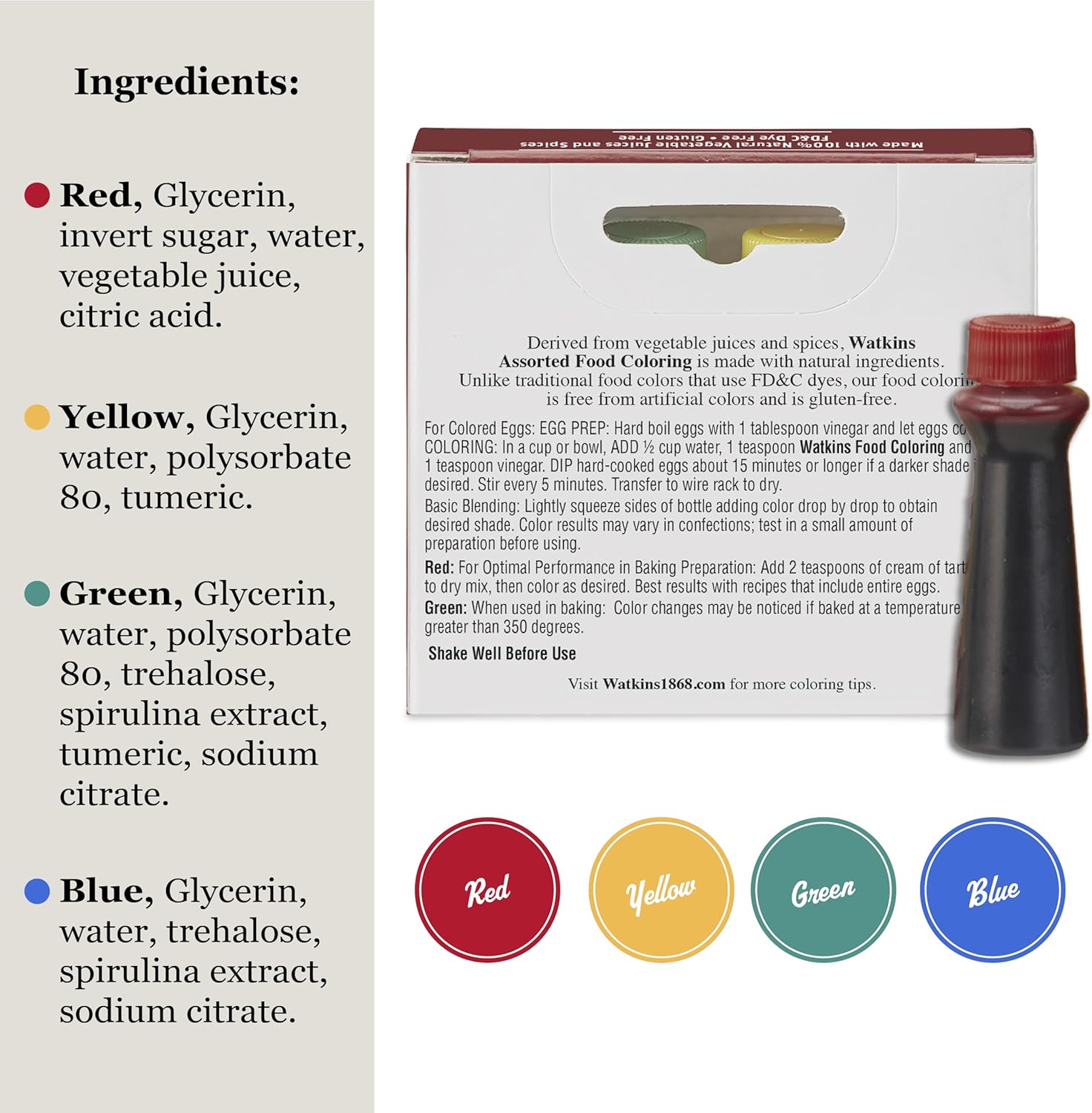
- Clean-label peace of mind from vegetable-derived pigments like beet juice, turmeric, and spirulina
- Safe for children's treats with no FD&C artificial dyes
- Inclusive formulation fits gluten-free, kosher, and non-GMO diets
- Trusted American-made brand with straightforward ingredient sourcing
- Bulk single-color 12-pack options reduce reordering for frequent bakers
- Glycerin-based liquid blends smoothly into batters, frostings, and icings
- Made cookies actually taste better compared to artificial dye versions
- Allergen friendly formulation
- Beautifully sealed bottles / full good sized bottles
- Easy cleanup
- Colors mix well into buttercream and icing
- Strong/vibrant color reported in at least one experience (surprising brightness)
- No staining when used in toddler sensory play (bath, shaving cream, yogurt)
Perfect for
- Tinting buttercream frosting and cake batter for birthdays and holidays
- Decorating sugar cookies and royal icing with natural colors
- Dyeing Easter eggs using plant-based pigments
- Coloring homemade play dough and edible craft projects for kids
- Creating colored macaron shells, fondants, and royal icing without artificial dyes
- Baking red velvet cake (color bakes out to a slightly reddish brown)
- Truffle candy filling (white base)
- Christmas sugar cookie decorating with kids
- Baking cupcakes/cakes where color fades in the oven
- Mixing custom colors by kids while decorating cookies
Product Dimensions: 0.8 x 3.2 x 2.9 inches
The product is for adult
Nutrional value: on the product
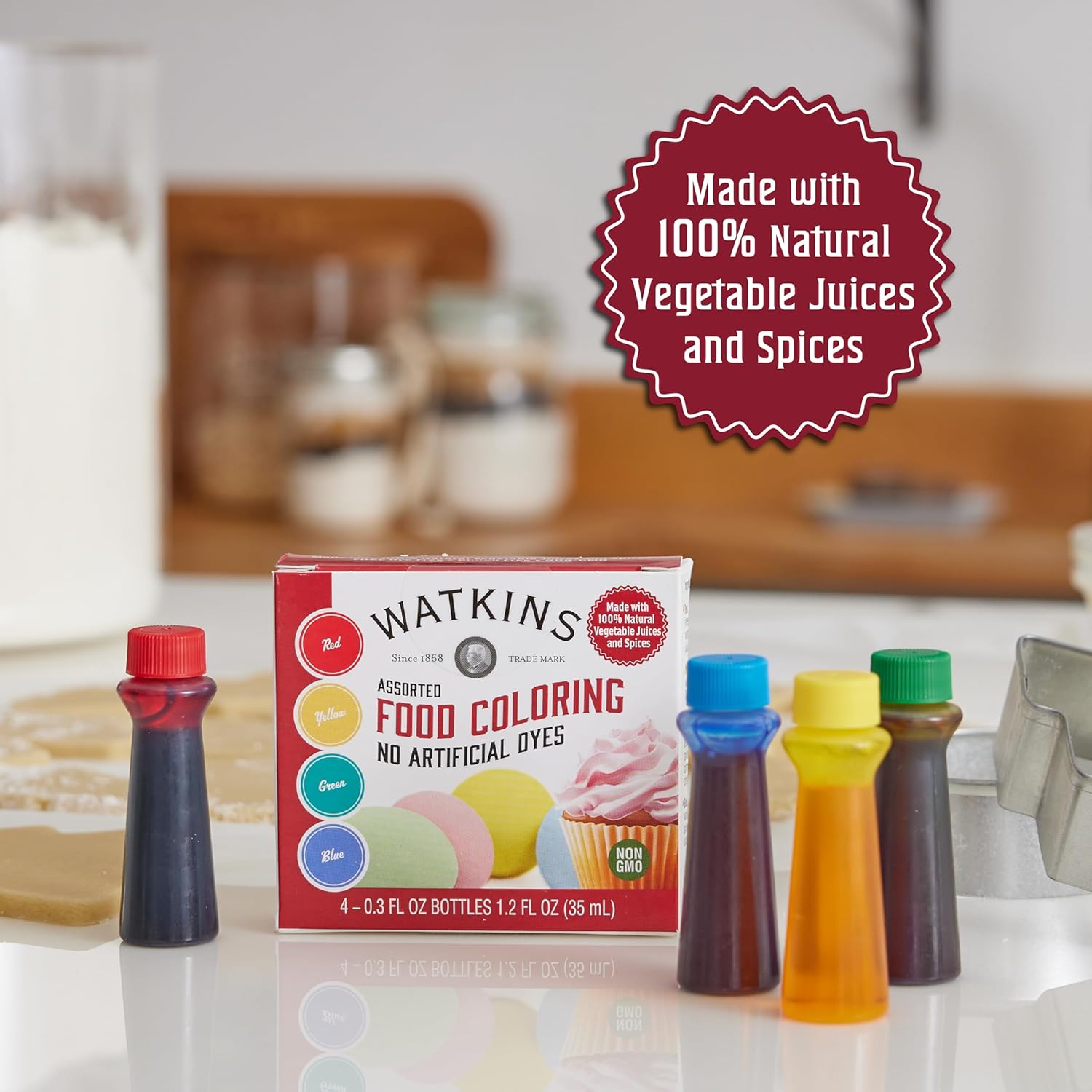
Derived from pure vegetable juices and spices including beet juice, turmeric and spirulina extract.
FD&C Dye Free
No Artificial Colors
Non-GMO, Gluten Free
Crafted in the USA
Frequently Asked Questions
Is this food coloring safe for my toddler to use during sensory play in the bathtub?
Yes. Watkins uses vegetable-derived pigments like beet juice, turmeric, and spirulina, and reviewers report that the colors do not stain skin, bathtub surfaces, or fabrics during toddler sensory activities.
Will the colors wash out of my child's clothes and countertops if there is a spill?
The plant-based pigments are designed to rinse off easily with water. Customers note that cleanup is simple, and the colors lift from most surfaces without leaving permanent stains.
Can I let my child mix the colors themselves without worry about artificial dyes?
Absolutely. There are no FD&C artificial dyes in the formula, so children can experiment with color mixing in cookie decorating, play dough, yogurt, or shaving cream without exposure to synthetic color additives.
Is the bottle designed so a small child cannot open it and make a mess?
Each bottle is a sealed 0.3 oz container with a controlled dropper-style opening, which makes it easy to dispense measured drops and helps limit spills during kids' baking projects.
Are these colors safe to use on a cake my child will eat at their birthday party?
Yes. The formula is allergen friendly, gluten free, kosher, and non-GMO, and contains no artificial colors, making it a clean-label choice for children's birthday cakes and treats.
Is this a good food coloring to use for my kid's Easter egg dyeing project?
Yes. The vegetable pigments are well suited for dyeing Easter eggs, and because the colors are plant based, parents feel comfortable letting children handle the activity.
Can my child use this to color homemade play dough without staining their hands?
Yes. Parents report no staining when the colors are mixed into homemade play dough, and the glycerin base blends smoothly into most dough recipes.
Is this coloring set a fun and safe gift for a child's cookie decorating class?
Yes. The four-color assortment covers the primary shades kids need, and the clean-label formula gives parents and instructors confidence during shared baking activities.
Will the color stay bright after my child bakes cupcakes in a hot oven?
Heat can soften some shades during baking, so you can add a slightly more generous amount to the batter, or finish with a fresh coat of colored buttercream on top for the brightest result.
Is this a better choice for my family than the typical grocery store food coloring?
Compared with conventional grocery store dyes that contain FD&C artificial colors, Watkins uses pure vegetable juices and spices, which many parents prefer for children's treats.
Is this safer than traditional gel food coloring that contains artificial dyes?
Yes. Watkins is free of FD&C artificial dyes and instead uses beet juice, turmeric, and spirulina, so it is a cleaner option for families who want to avoid synthetic colors in their children's food.
How does this compare to other natural food coloring brands for kids' baking?
Watkins stands out with its glycerin-based liquid that mixes easily into batters and frostings, plus the option to buy individual 12-pack color refills for the shade your child uses most often.
Is there anything in this product I should worry about for a child with allergies?
The formula is allergen friendly, gluten free, kosher, non-GMO, and vegan, and is made in the United States with straightforward ingredient sourcing, but you should always review the full label for any specific household allergy.
Will a child accidentally spill a large amount because the bottle is so small?
Each bottle is only 0.3 oz, so even a full tip-over releases a small, manageable amount that wipes up quickly with a damp cloth.
Is the flavor okay for a picky child who does not like artificial taste?
Yes. Many customers report that baked goods actually taste better with Watkins than with conventional artificial dye versions, since the formula is based on mild vegetable pigments rather than synthetic additives.
Can my child use these colors for slime and other non-food crafts?
The colors are food-grade and safe to handle, so they are suitable for edible crafts like play dough and frosting. For non-food projects like slime, a dedicated craft colorant is generally a better fit.
How do I use Watkins natural food coloring in buttercream frosting?
Add the liquid color drop by drop to your prepared buttercream and stir thoroughly. The glycerin-based formula blends smoothly, and the color often deepens after the frosting rests, so start with a small amount and adjust as needed.
Will the colors hold up when I bake them inside cake or cupcake batter?
Natural plant-based pigments can soften in the oven, so many bakers add a slightly more generous amount to the batter or finish the baked goods with a fresh coat of colored buttercream on top for the most vibrant result.
How do I mix custom colors from the red, yellow, green, and blue set?
Use the four primaries as building blocks. For example, mix red and yellow for orange, blue and yellow for green, or red and blue for purple, and adjust drop by drop until you reach your desired shade.
Does this food coloring work with royal icing and fondant?
Yes. The liquid glycerin base mixes easily into royal icing, fondant, and macaron shells, and the vegetable pigments provide clean-label color without artificial dyes.
Is this product compatible with vegan, kosher, and gluten-free baking recipes?
Yes. The formula is vegan friendly, certified gluten free, kosher, and non-GMO, so it fits a wide range of dietary and lifestyle baking needs.
What is included in the assorted 4-pack box?
The assorted pack contains one 0.3 oz bottle each of red, yellow, green, and blue food coloring. Individual 12-pack color refills of each shade are also available if you need to restock a single color.
Is this product safe for people with common food allergies?
The formula is allergen friendly, gluten free, kosher, non-GMO, and vegan, but you should always review the full ingredient list on the bottle to confirm it matches any specific household allergy.
Where is Watkins food coloring manufactured?
Watkins food coloring is made in the United States, using pure vegetable juices and natural spices such as beet juice, turmeric, and spirulina extract.
What is the difference between Watkins natural food coloring and conventional FD&C food coloring?
Conventional FD&C food coloring uses synthetic artificial dyes, while Watkins uses pigments derived from vegetables and spices like beet juice, turmeric, and spirulina, with no FD&C artificial colors in the formula.


